
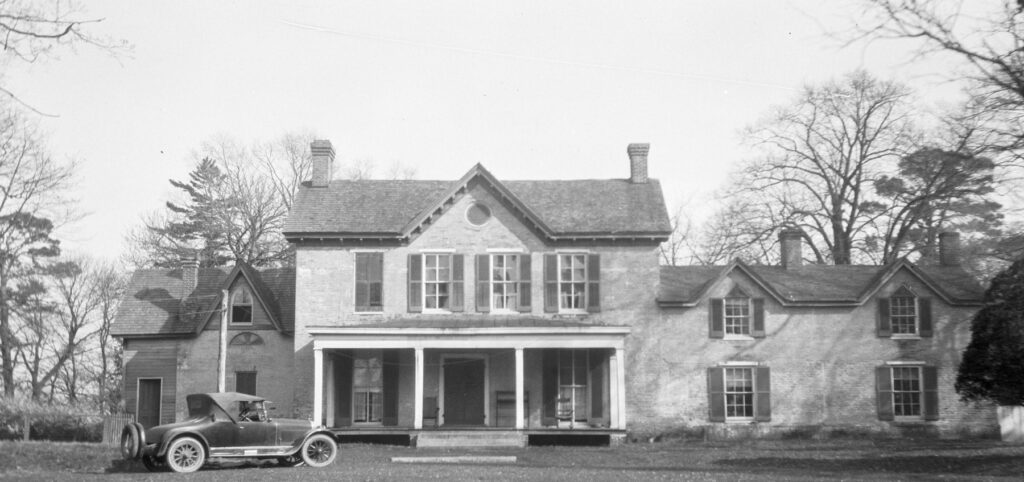
When Olivia Wood first stepped back into Poplar Grove, the centuries-old family home resting along Emory Creek in Queen Anne’s County, she knew she was assuming more than a renovation. She was choosing stewardship. The house, resting on the property gifted to her family generations ago, had waited nearly 20 years for someone to intervene before time unmade what history had left behind.
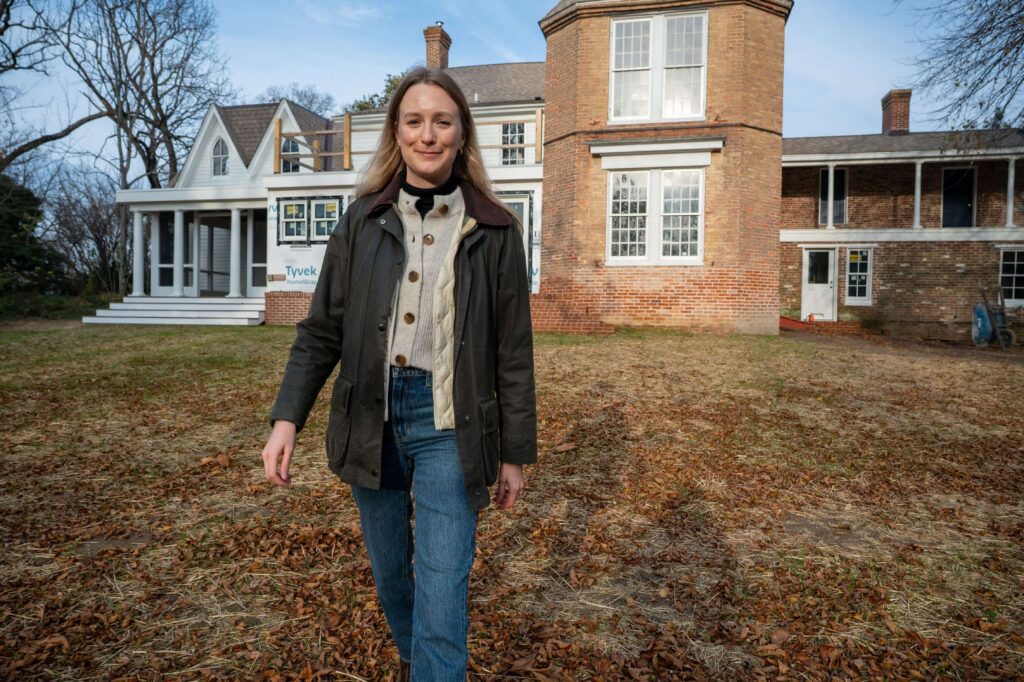
“My goal is that we all can live in harmony together and not get in each other’s way,” Wood said of her ancestors, whose presence she feels in every corner of the property. “I think they’re happy that one of their own is living there now.”
Wood’s family has held Poplar Grove for 11 generations, its story recorded in letters, journals, receipts, and the memories of descendants who never forgot the land’s meaning. When the home fell into disrepair after decades of deferred maintenance, Wood and her husband, Eric Stradley, chose to rescue it rather than reinvent it.
“I’ve been working really hard on trying to create good relationships with them,” she said of the ancestors whose graves she cleared and tended long before construction began. “Whenever family members come now, they say it feels lighter. It feels warm.”
That sense of responsibility shaped every choice that followed, including the selection of Harper & Sons, Inc. of Easton, the general contractor trusted to stabilize and restore one of the Eastern Shore’s oldest properties.
A House Preserved in Time
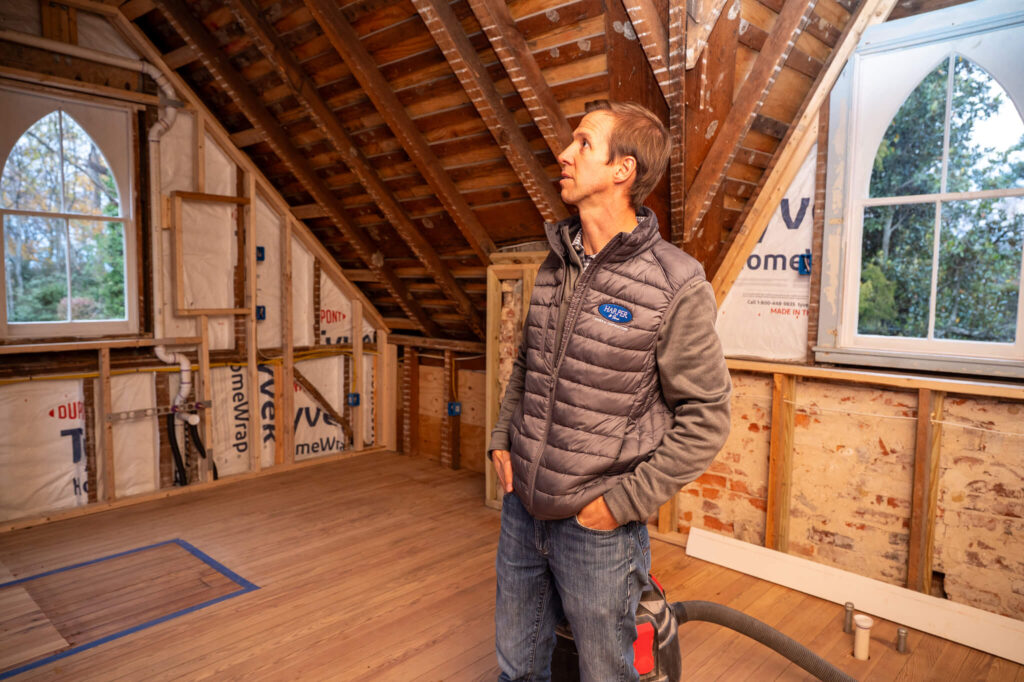
When Harper & Sons Project Manager Keith Short first toured Poplar Grove with Wood, Stradley, and company vice-president Benson Harper, the state of the home struck him.
“It was kind of a culture shock when you see it for the first time,” Short said. “Old furniture and paintings were hanging on the wall, deer heads, and an old cast-iron tub sitting in the middle of one of the rooms. You could see the results of a 20-year pause on the home.”
Despite its stillness, the house had been protected in at least one crucial way. In 2018, Wood’s father replaced the roof to stem worsening water intrusion.
“Putting that roof on really saved it, in my opinion,” Short said. “Another six years of water damage could have taken the place a lot further down that path of deferred maintenance.”
The home was holding on. Harper & Sons’ task was to make it sound again.
An Engineering Puzzle Rooted in History
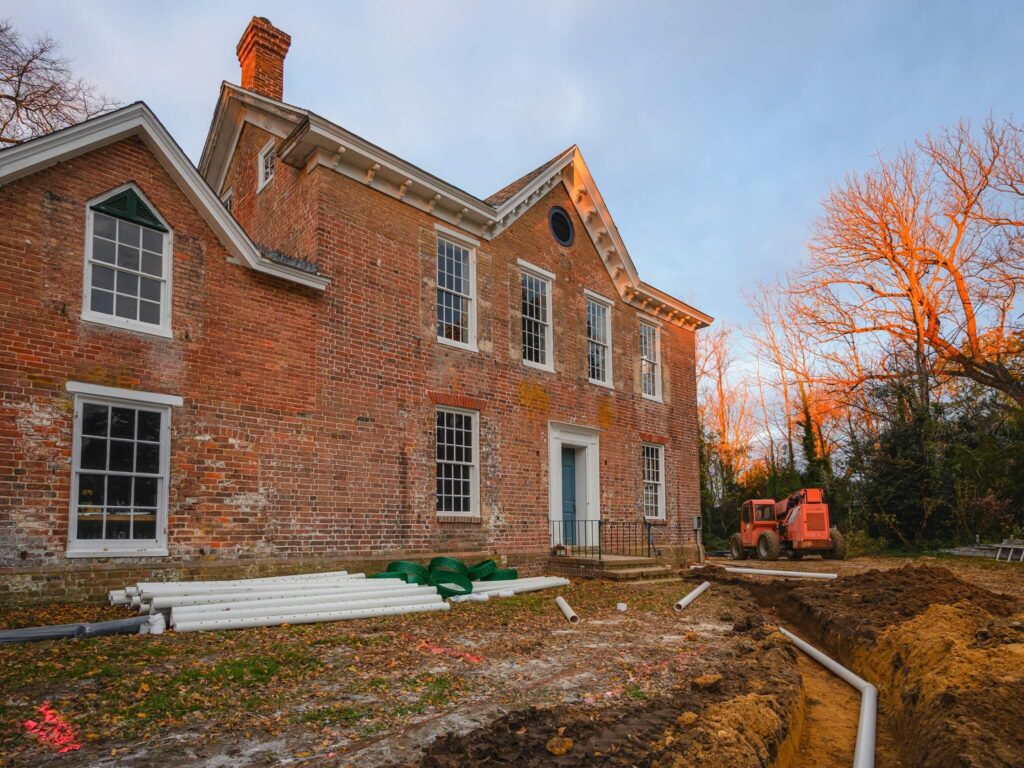
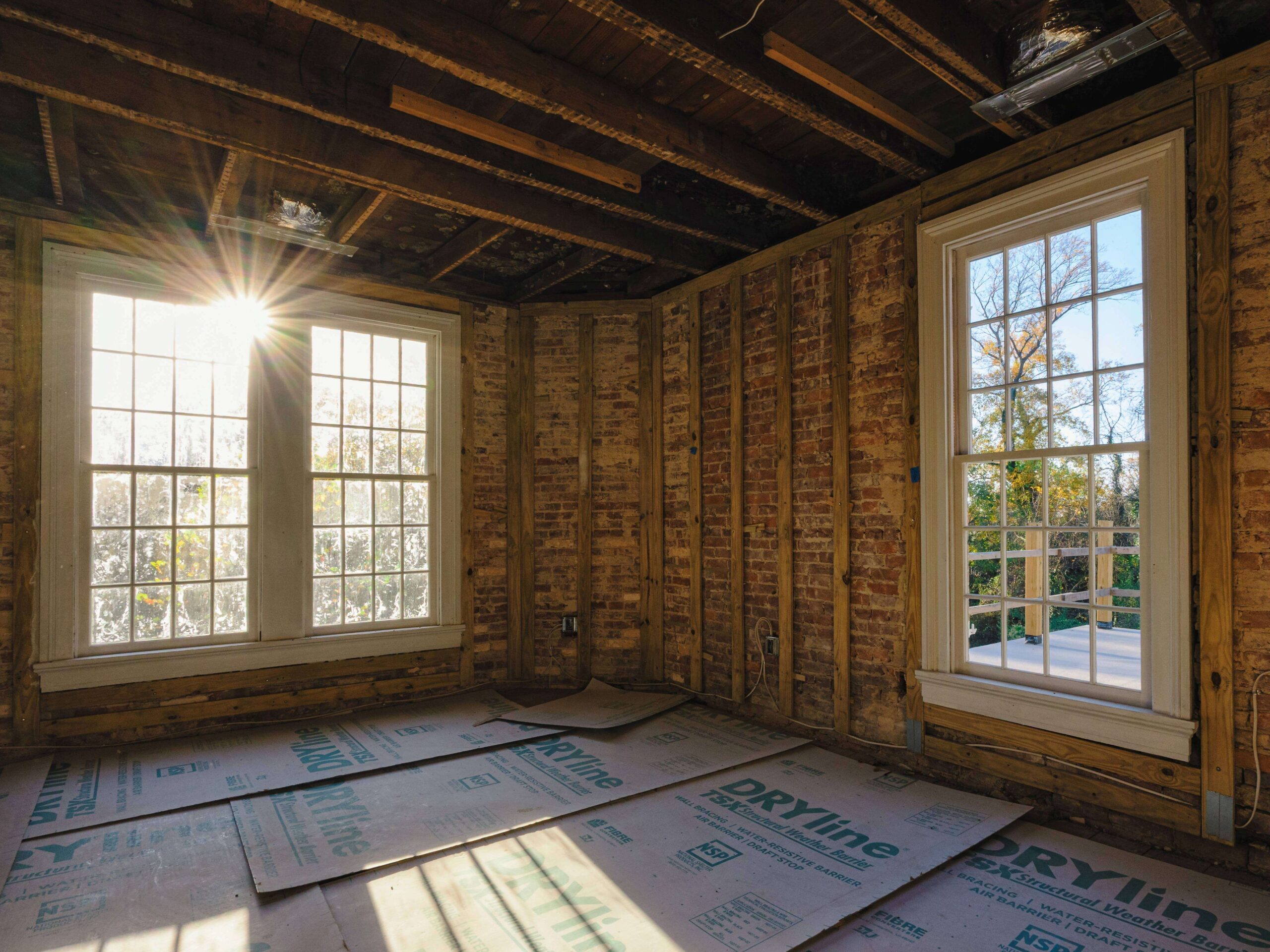
Historic restoration is never simple, and Poplar Grove offered unusual challenges. Short describes discovering an entire section of the house built on a dry-laid brick foundation.
“You could just grab a brick by hand and pull it out of the foundation, kind of like Jenga,” he said. The team stabilized that corner by jacking up the structure and pouring a new foundation to match the historical footprint.
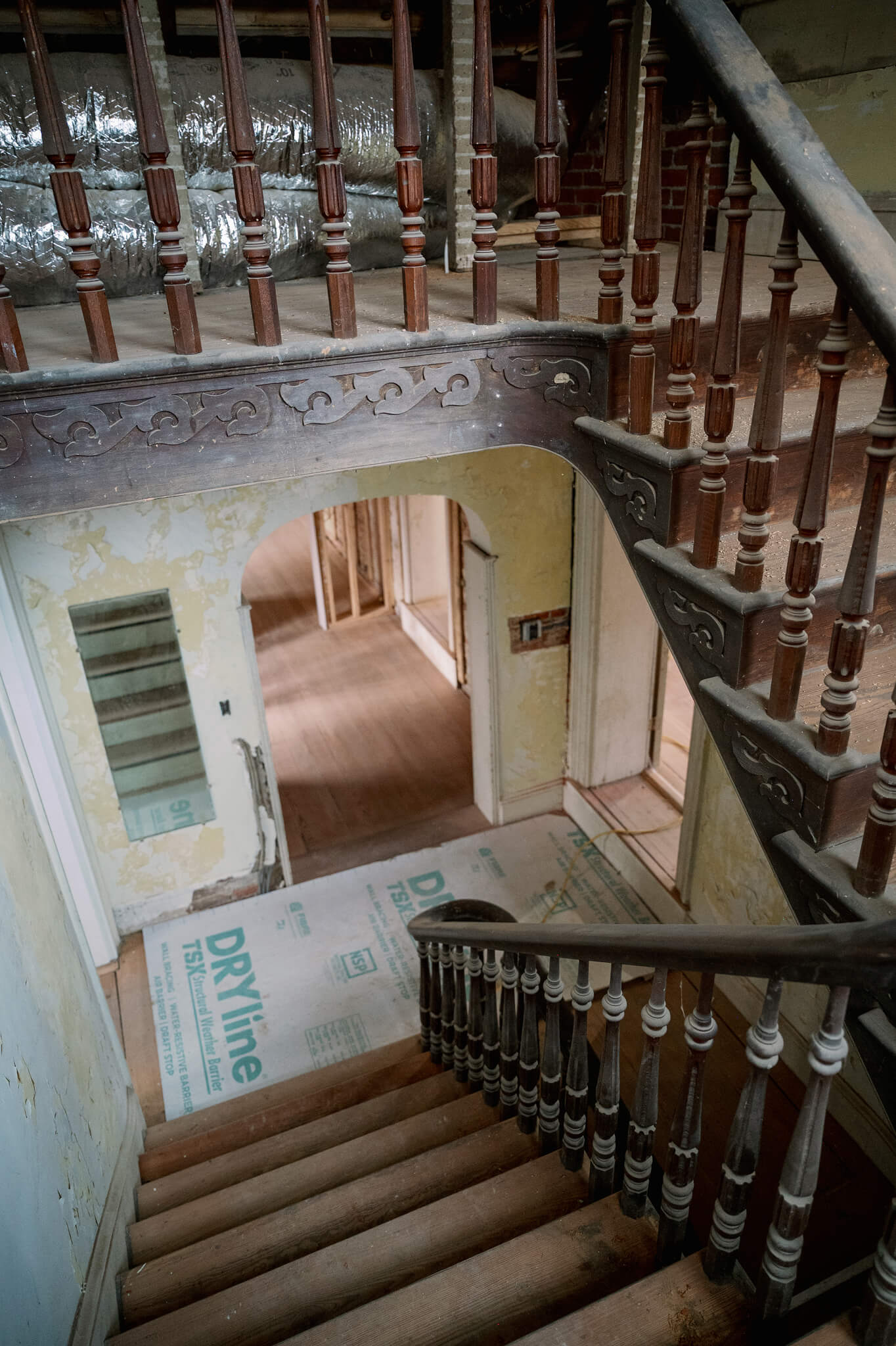
The floor framing of the library was constructed of original, decaying poplar joists, owing to the poplar groves near the farm, and harkening to its name. In order to replace the framing, the original, gauged heart pine flooring was labeled and removed, one piece at a time, and reinstalled in the same order on the replaced floor joists.
Another area known as the Snug had settled so severely that Harper & Sons and the project Architect, Ward Bucher of Encore Sustainable Architects, had long planned to underpin it. And as the team opened walls for plumbing and electrical work, they learned that much of the plaster had failed.
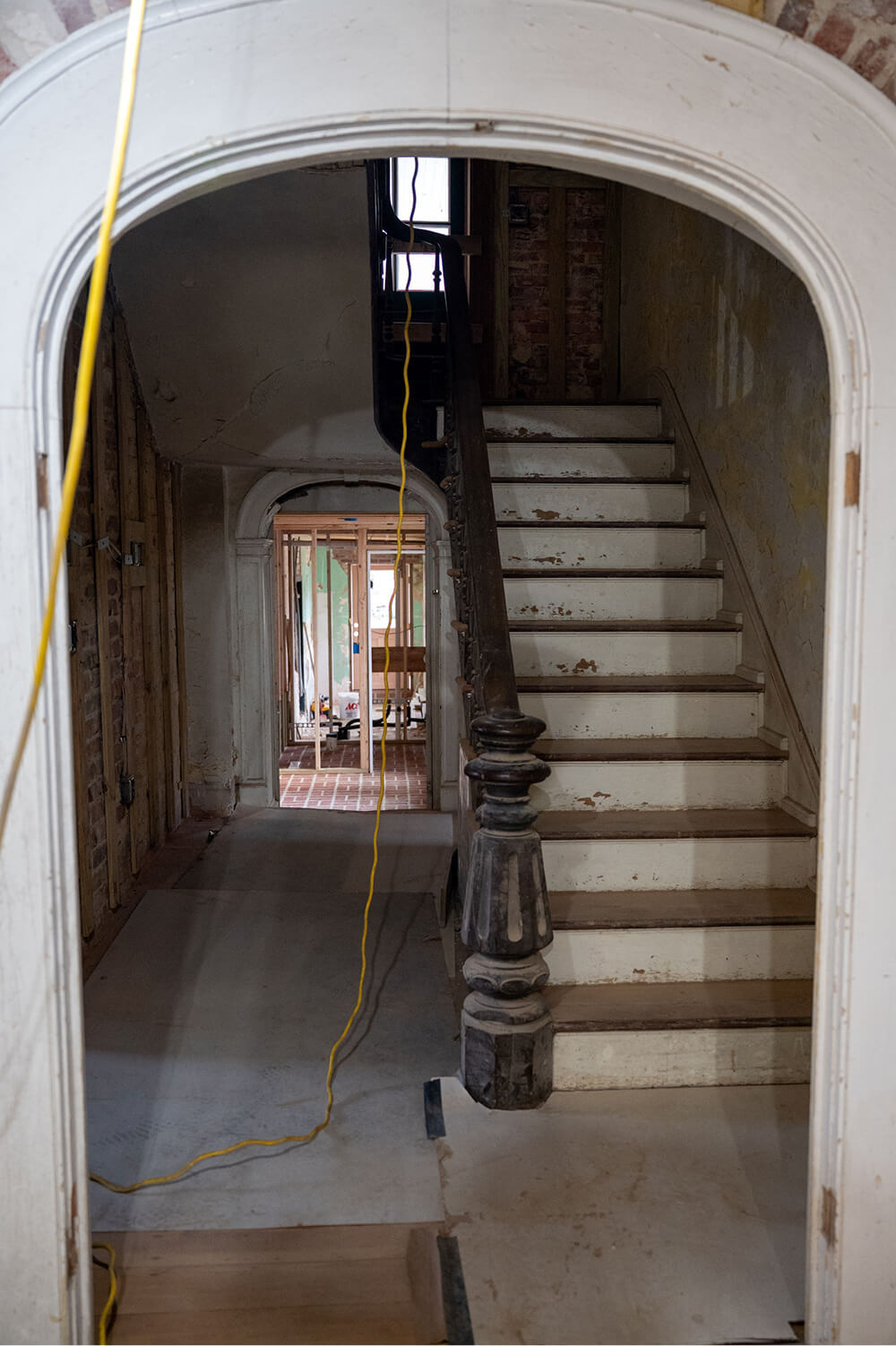
“We had originally intended to save more of the plaster, but more and more of it had failed or lost its bond to the brick,” Short said. Most of it was replaced with drywall to allow safe electrical installation and meet modern code.
The chimneys, seven in total, posed another delicate question. Three are being restored to working order with wood stoves and new liners, preserving their original mantels. The others were repaired structurally and left decorative so that future generations can restore them if they choose.
“We kept those with slate caps on top of the chimney,” Short said. “They could be restored later if someone wanted to.”
For Wood, preserving possibility is as important as preserving the past.
History Inside the Walls
As the walls opened, the house revealed pieces of its own memory.
Workers found coal receipts from the 1850s, which had slipped through attic floorboards and into the wall cavities. They uncovered medicine bottles belonging to a local 19th-century apothecary, a family friend’s ancestor. They even found letters reprimanding Wood’s great-great uncle, EB Emory, for unpaid bills, humorously confirming family lore of his gambling habit.
“That was the guy,” Wood told the crew when she saw the overdue notice. “This is the gambler I told you about.”
Short also recalled a moment early in construction when a wall hissed as workers passed by. They suspected an animal nesting invisibly in the crawlspace. “We never saw the critter,” he said, “but there was one wall making some noises.”
It is these small discoveries that unite Wood with the many who lived here before.
Preserving the Soul While Creating a Home
Poplar Grove is large, but its expansion across generations created natural divisions. Wood and Stradley chose to restore the main house now and complete the smaller wing in a second phase.
Each generation added something new, Wood explained. “It’s not a perfect time capsule. It’s a mishmash of everything, and I like that.”
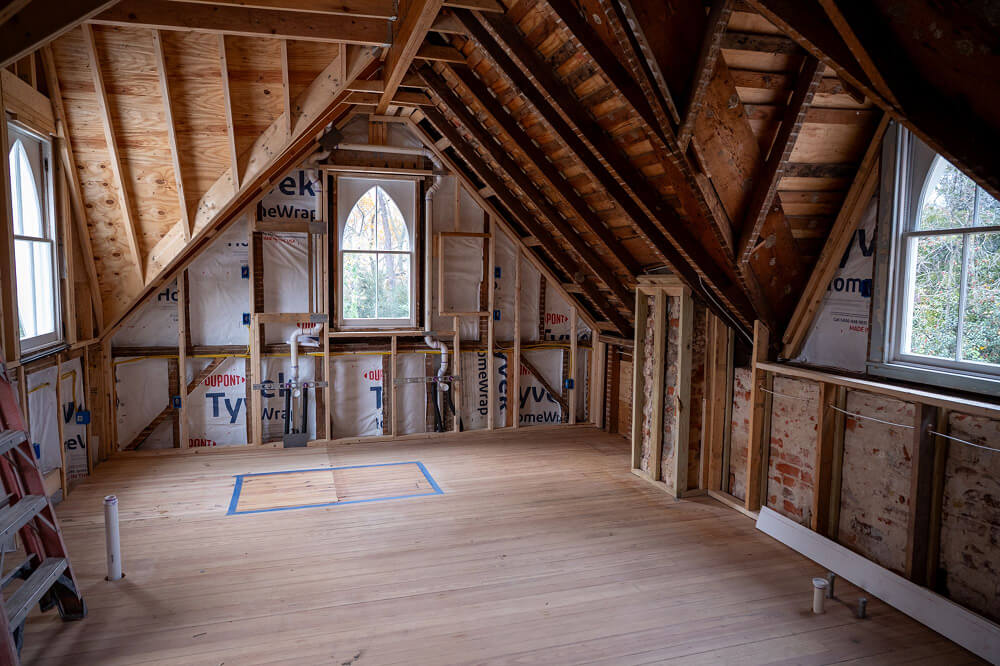
“It’s not a perfect time capsule. It’s a mishmash of everything, and I like that.”
The couple and Bucher relocated the kitchen to a space that once held a screened porch, creating a warm, functional hub while respecting the home’s historical layout. Bathrooms were added, but the footprint largely remains the same. And wherever possible, original materials were reused, including bricks found preserved inside the walls.
Throughout the project, Wood has been drawn to the house’s deeper stories. In one room, preservation specialists identified a shade of indigo blue on the bricks, common in colonial kitchens and tied to Caribbean influences. “I would love to learn more about this blue,” she said. “It had to be put there for a reason.”
She is also working to understand the lives of the enslaved people who lived and worked at Poplar Grove. She hopes to locate their burial ground and connect with descendants.
The Skill Behind the Restoration
Vice-President Benson Harper said projects like Poplar Grove represent the heart of what Harper & Sons is dedicated to achieving.
“We often renovate and build commercial buildings, and create modern spaces, but historic work asks something more,” Harper said. “It requires engineering expertise, craftsmanship, patience, and reverence. Poplar Grove deserved all of that.”
Short, who holds degrees in physics and civil engineering, said this project pushed every part of his training.
“You’re bringing things up to today’s standards while preserving what’s already there,” he said. “It’s challenging, but it’s rewarding.”
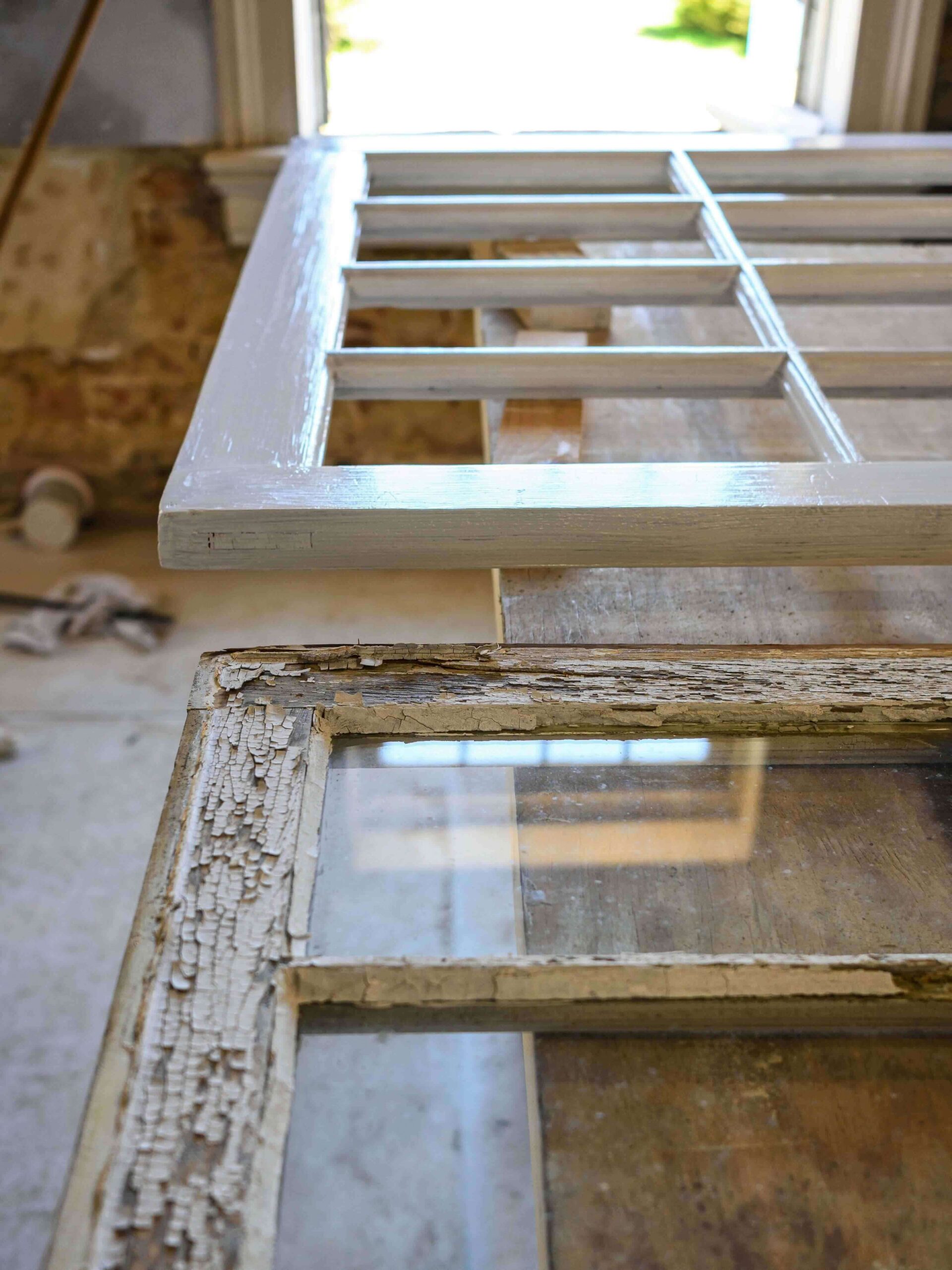
Wood describes Harper & Sons as a stabilizing force during a complex, emotional project.
“They’ve made the construction part the easiest part,” she said. “If you have a project that feels overwhelming and you need people you can trust, this is the right place to go.”
She points to the team’s consistency and the long-standing relationships among subcontractors and artisans. Many have worked together since the 1990s. Some, she learned, even attended school with her family.
“It feels like this project is in the hands of people who understand the Eastern Shore,” she said.
The Weight and Promise of Legacy
Restoring Poplar Grove is not simply an architectural undertaking. It is an act of remembrance, a bridge between centuries, and a commitment to the future.
Wood often thinks about the next person who will care for this place. “In 200 years, someone will open these walls again,” she said. “They’ll see what we added to the story.”
Short feels the same. “It’s one of those projects I’ll always remember,” he said. “The history, the family connection, the significance of preserving something like this.”
Poplar Grove stands today not as a rescued relic but as a living home, restored with care by a family determined to honor its past and a firm equipped to protect its future. The work is intricate, layered, and far from ordinary. Yet the reason behind it is simple.
Some homes hold history. Others hold lineage.
Poplar Grove holds both.
And now, thanks to the Wood and Stradley’s passion and the expertise of Harper & Sons, a bright future awaits this gem of Centreville’s and the nation’s history.